Indium News

– Nokia’s crash forced Finland to consider a hard truth it had been ignoring: The economy’s traditional mainstay, the paper industry, is being killed by the very same tech innovation that fed the national economy in the 2000s. Unemployment is at 7 percent now, much lower than during the 1990s crisis, but it’s growing and, with the end of the tech boom, it’s hard to say where new jobs will appear. “It remains uncertain whether other sectors can consistently compensate for the output loss in Finland’s wood and paper industry and its electronics industry,” S&P wrote, explaining the downgrade. –

– Finland’s lesson for Europe is that growth is all about competitiveness. Big, diversified economies need more than one miracle like Nokia to thrive. And that takes a flexible labor market, a free economic environment and, yes, some government investment in infrastructure, research and development. It makes little sense to pin all hopes on monetary stimulus, as the French government appears to be doing in the face of its own looming S&P downgrade. –

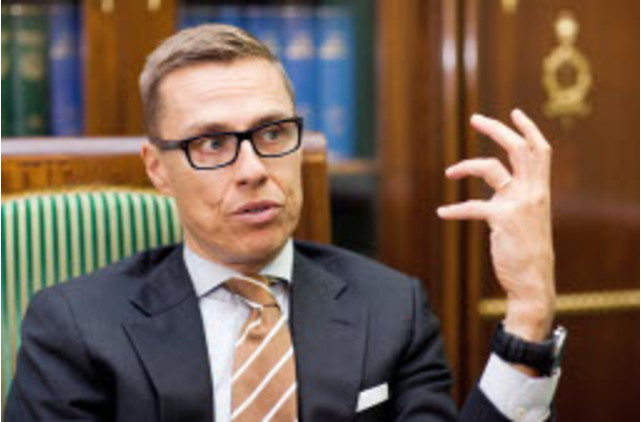
Prime Minister Stubb, at least, gets the message – does yours??? …˝He calls the downgrade a “wake-up call” and says Finland needs to speed up structural reforms.˝

Read source article here.

My op-ed in the WSJ: Lessons in Leadership, or Its Lack, and its Real Consequences.

By Milan A. Račić (March 13, 2014) • The world justifiably feels for Ukraine and finds itself scrambling to come up with an appropriate response to the Russian incursion. Yet even as a whole host of new democracies race to forget their pasts, one could see this Ukraine mess coming. If you are running any of the new democracies with difficult histories—Poland, any of the Baltic republics, Croatia, Hungary and others—what are you to make of the developments in Ukraine? What lessons are there for you and for your people? Here are three:

Weapons trump agreements. Ukraine now looks incredibly naïve to have agreed to give up its nuclear weapons. Ukraine, the United States, Russia and the United Kingdom signed the 1994 Budapest Memorandum on Security Assurances, under which Russia, the U.K and the U.S. promised to respect Ukraine’s borders. They also agreed to abstain from the use or threat of force against Ukraine; to support Ukraine where an attempt is made to place pressure on it by economic coercion; and to bring any incident of aggression by a nuclear power before the U.N. Security Council. In return, Ukraine agreed to give up what was then the third-largest nuclear arsenal in the world. The treaty clearly uses the term “assurances” in reference to the other signatories’ pledges, but Ukraine has always interpreted the assurances as “guarantees.”

It is arguable whether Ukraine had the wherewithal to maintain the weapons and even whether nuclear weapons are an effective deterrent against a conventional attack. But in hindsight, you can bet that Ukraine’s acting president Oleksandr Turchynov and his transition team rue the day Ukraine gave up its rusty but powerful nuclear deterrent in return for paper assurances.

Other states beware: Treaties of cooperation, partnership, mutual defense and even union work wonderfully in times of peace and plenty—when you don’t need them. All too often, though, such undertakings leave the weaker partners holding the empty bag in times of war or economic hardship.

As expensive as such advice is to follow, and as politically incorrect as it may seem, new democracies would be wise to look back to early last century for guidance and follow the admonition of President Theodore Roosevelt to “speak softly, and carry a big stick.” This doesn’t necessarily mean that new democracies need to go on a weapons-buying spree, but they do need to think twice before giving up their military capabilities or letting them degrade. In short, if you are a new democracy living in a historically dangerous neighborhood, speak softly—but don’t give up your stick.

Make hay while the sun shines. Ukraine was handicapped by the remnants of a heavy and long-term Russian colonization policy. However, like many of the new democracies, it had 20 years to get its act together politically and economically—and chose not to. This assessment may sound rough but it is true, and not just for Ukraine. The citizens and politicians of Croatia, Hungary, Slovenia and a host of other countries have allowed inept leadership to squander the first two decades of their newly attained independence.

Instead of building on the national goodwill they inherited, which was ready to forgive many rookie leadership mistakes, the various leaders of Ukraine couldn’t get over their adolescent self-absorption and allowed graft, corruption, greed and legal mayhem to eat away at an already fragile state, weakening it financially and militarily to such a degree that its ultimate survival has been thrown in doubt.

It is difficult to build a prosperous new democracy on the foundations of a harsh and oppressive past. Yet it is exactly that harsh past which should make its new leaders more responsible, not less; more honest, not less; and more statesmanlike, not less. The crisis in Ukraine today is a crisis of leadership—in Ukraine, the EU, U.S. and Russia. While Ukraine cannot influence the leadership elsewhere, it can control the leaders it produces and lets run the country.

Nation-building is messy, and democracy can seem further away with each new “free” election, and good leadership further away with each new political party. Ukrainians (and people in some other countries with similar backgrounds and choices) need to ask themselves:

What have we done for 20 years to ensure that we are economically and militarily as strong as possible? Did we pick leaders because they told us the truth or because they told us what we wanted to hear? Did we hold leaders accountable, or did we blindly follow the party line? Did we always blame Russia for our problems, even when we were our own worst enemies? Did we see corruption in what others did, but not in what we did, which we classified as merely helping our families? Did we get involved, or did we sit idly by and complain?

None of the foregoing absolves Russia of its responsibility for its military aggression or us from our responsibility to help. It does highlight that Ukraine is weaker because of its own choices.

We are all potentially Ukraine. The “we” refers to any of the 20-plus new democracies in Central and Eastern Europe with a tumultuous past and an immature political present. We are not very different, and it can happen here. Many of us have frittered away the national dreams of generations, the goodwill of our countrymen and the good intentions of our friends and neighbors. That is nobody’s fault but ours. Let the sad example of Ukraine be a wake-up call.

Mr. Račić is the CEO of Indium, a Croatia-based management-consulting and business-development company.

Read source article in WSJ here

© Dow Jones & Company, Inc.

Moje mišljenje u The Wall Street Journal: Lekcije o vodstvu ili nedostatku vodstva i stvarne posljedice 
Milan A. Račić (13.Ožujak, 2014.) • Svijet opravdano suosjeća s Ukrajinom i smišlja odgovarajući odgovor Ruskom napadu. Iako cijeli niz novih demokracija nastoji zaboraviti svoju prošlost, mogao se uočiti nered koji dolazi u Ukrajinu. Ako sagledate bilo koju od novih demokracija sa teškom poviješću —Poljska, bilo koja od Baltičkih Republika, Hrvatska, Mađarska i druge –  što bi se moglo zaključiti o zbivanjima u Ukrajini? Koje lekcije su tu za vaš narod?  Ovdje navodim tri:

• Oružje nadjačava sporazume. Ukrajina sada izgleda nevjerojatno lakovjerna pristajući da se odrekne svog nuklearnog oružja. Ukrajina, Sjedinjene Američke Države, Rusija i Velika Britanija, potpisale su 1994 u Budimpešti –  Memorandum o sigurnosnom jamstvu, prema kojem su Rusija, Velika Britanija i Sjedinjene Američke Države obećale poštivati granice Ukrajine.  Također su se sporazumjele da će se suzdržavati od uporabe prijetnje ili sile protiv Ukrajine; da će podržati Ukrajinu ako se bude pokušavao pritisak na nju sredstvima ekonomske prisile; i da će svaku pojavu agresije nuklearnom snagom prijaviti Vijeću sigurnosti UN-a. Za uzvrat, Ukrajina je pristala odreći se trećeg najvećeg nuklearnog arsenala na svijetu. Ugovor izričito koristi pojam “osiguranja” u odnosu na obećanja ostalih potpisnica, ali je Ukrajina uvijek interpretirala osiguranja kao “jamstva”.

Sporno je da li je Ukrajina imala potrebna sredstva za održavanje oružja pa čak i da li je nuklearno oružje učinkovito za odvraćanje od konvencionalnog napada. Ali gledajući unatrag, možete biti sigurni da vršitelj dužnosti predsjednika Ukrajine Oleksandr Turchynov i njegov tranzicijski tim žale za danom kada se Ukrajina odrekla zapuštenog, ali moćnog nuklearnog oružja u zamjenu za papirnata jamstva.

Druge države, budite na oprezu: sporazumi o suradnji,  partnerstva, zajedničke obrane pa čak i unije, funkcioniraju prelijepo u vrijeme mira i obilja – kada ih ne trebate.  Prečesto, međutim, takvi pothvati, ostavljaju slabije partnere držeći praznu torbu za vrijeme rata ili ekonomskih poteškoća.

Kao što je skupo slijediti takav savjet i kao što se čini politički nekorektno, bilo bi mudro za nove demokracije osvrnuti se na početak prošlog stoljeća za vodstvo i slijediti savjet predsjednika Theodore Roosevelt-a da se “tiho govori i nosi veliki štap”. Ovo ne znači nužno da nove demokracije trebaju masivno početi kupovati oružje, već da moraju dvaput razmisliti prije nego se odluče odreći svojih vojnih sposobnosti ili dopustiti da ih se degradira. U kratko, ako ste nova demokracija koja živi u povijesno opasnom okruženju, govorite tiho – ali se ne odričite štapa.

• Napravite sijeno dok sunce sja.  Ukrajina je bila hendikepirana ostacima teške i dugoročne Ruske kolonizacijske politike. Međutim, kao i mnoge nove demokracije, imala je 20 godina da uskladi svoje političke i ekonomske postupke —i izabrala ne učiniti to. Ova procjena može zvučati grubo, ali je istinita, i to ne samo za Ukrajinu. Građani i političari iz Hrvatske, Mađarske i Slovenije, i mnoge druge zemlje dopustile su nesposobnom vodstvu da protrate prva dva desetljeća svoje novostečene neovisnosti.

Umjesto da su gradili nacionalnu stečevinu koju su naslijedili, koja je bila spremna oprostiti mnoge početničke pogreške vodstva, razni čelnici Ukrajine nisu mogli prijeći preko svoje adolescentske samo-dovoljnosti i dopustili su mito, korupciju, pohlepu i pravni kaos, da pojedu već krhku državu, oslabljujući je financijski i vojno u tolikoj mjeri da je njezin krajnji opstanak postao neizvjestan.

Teško je graditi prosperitetnu novu demokraciju na temeljima surove i ugnjetavačke prošlosti. Ipak, točno je da je surova prošlost ta koja bi trebala učiniti nove čelnike odgovornijima, a ne manje odgovornima; iskrenijima, a ne manje iskrenima; i više državničkima, a ne manje državničkima. Kriza u Ukrajini danas je kriza vodstva – u Ukrajini, Europskoj Uniji, SAD-u i Rusiji. Dok Ukrajina ne može utjecati na vodstvo negdje drugdje, može kontrolirati vodstvo koje ona stvara i kojemu dopusti da vodi državu.

Izgradnja nacije je neuredna i demokracija se može činiti sve udaljenijom sa svakim novim “slobodnim” izborom, a dobro vodstvo sve udaljenije sa svakom novom političkom strankom. Ukrajinci (i ljudi u nekim drugim državama sa sličnim iskustvom i izborima) trebaju se zapitati:

Što smo učinili kroz 20 godina kako bi osigurali da smo ekonomski i vojno najjači što možemo biti? Da li smo izabrali vođe zato što su nam rekli istinu ili zato što su nam rekli ono što smo htjeli čuti?  Da li smo držali vođe odgovornima, ili smo slijepo slijedili  stranačku liniju? Da li smo uvijek krivili Rusiju za naše probleme, čak i kada smo sami sebi bili najgori neprijatelji?  Da li smo vidjeli korupciju u djelima drugih, ali ne u svojim vlastitim djelima, što smo klasificirali tek kao pomaganje svojim obiteljima? Da li smo se uključili, ili smo samo lijeno sjedili i žalili se?

Ništa od navedenog ne oslobađa Rusiju njene odgovornosti za počinjenu vojnu agresiju niti nas naše odgovornosti za pomoć.  Navedeno ističe da je Ukrajina slabija zbog svojih vlastitih izbora.

• Svi smo potencijalno Ukrajina. “Mi” se odnosi na bilo koju od 20-tak novih demokracija u Središnjoj i Istočnoj Europi, sa burnom prošlosti i nezrelom političkom sadašnjosti. Nismo mnogo različiti i isto se može dogoditi i ovdje. Mnogi od nas su odbacili svoje generacijske nacionalne snove, nasljeđe naših sunarodnjaka i dobre namjere naših prijatelja i susjeda. To nije ničija krivnja nego naša. Neka tužan primjer Ukrajine bude poziv za buđenje.

Gospodin Račić je predsjednik Uprave tvrtke “Indium”, poslovno-razvojne tvrtke za upravljanje i savjetovanje, smještene u Hrvatskoj.

Pročitajte izvorni članak u  The Wall Street Journal ovdje

© Dow Jones & Company, Inc.

Doomed Firms Suck Up Finnish State Funds as Debt Load Swells

Bloomberg.com • Finland is pursuing a failed policy of using public funds to prop up companies with no hope of surviving on their own, according to the head of the country’s biggest business park operator, Technopolis Oyj.

– “We’re putting a lot of money into saving old industries,” Technopolis Chief Executive Officer Keith Silverang said during a March 10 meeting in central Finland with Pekka Haavisto, the minister in charge of managing state assets. “It’s a waste, we can’t save them.” –

– Finland’s economy has contracted for three of the past five years, depleting state coffers and destroying jobs. As demand for the nation’s forestry products and mobile phones evaporates, Finland has struggled to replace those markets with new growth engines. Industrial production slumped an annual 7.5 percent in January, falling for a 15th consecutive month. –

– The state, through its asset management unit Solidium Oy, is investing about 195 million euros ($270 million) in Outokumpu Oyj (OUT1V), a stainless-steel company that hasn’t booked a profit since 2007. It also accumulated a 16.7 percent stake in Talvivaara Mining Co. (TALV), a nickel miner that’s being restructured in an effort to save 500 jobs. Shares in the company have plunged 87 percent over the past 12 months…Such investments are making it harder for Solidium to deliver the dividends the state needs to plug its budget deficits. To make up for the shortfall, the unit is resorting to divestments to generate cash. –

Read source article here

Those Finnish colleagues who wish to study the subsidization of doomed firms in depth should come to Croatia for a PhD – we specialize in palliative care of doomed firms, and aspire to be the ˝heaven of industries past˝.

As I keep repeating – it doesn’t have to be this way, anywhere…self-destructive policies are a choice…

bloomberg.com • Spain’s state-backed development bank says the recovery in the euro region’s fourth-biggest economy is now strong enough for the lender to shift its strategy to focus on quality rather than quantity.

– As it steers away from extending emergency support, ICO is refocusing on helping those companies contributing to an export-led recovery with special loans and trade-finance guarantees, he said. It’s also investing in venture capital and cooperating with other European promotional banks. –

– “Because of a mixture of better funding and an improved economic outlook, people are starting to invest,” Escolano said. “The mood has changed in the corporate sector. Fixed investment in buildings, machinery or transportation equipment will increase this year for the first time since 2008.” –

Read source article here

Good for Spain and its development bank. Used wisely, development banks can be a powerful tool for driving healthy growth. Used ˝not so wisely˝, they can be a cover for unfair state subsidies and a powerful tool for political meddling and economic distortion.

This Spanish success is interesting from a local perspective, as the Croatian Bank for Reconstruction & Development (HBOR) will soon get a new chief (after 20 years). What model will HBOR emulate? Will the new leadership in fact be new, or will it be another case of Croatian leadership recycling. Time will tell…

– In fact, successful exporters tend to be part of an exclusive group of “superstar” companies. A recent study by Caroline Freund and Martha Denisse Pierola that examined export patterns in 32 countries found that the top 1% of exporters account for more than half of all (non-oil) exports, while the top 5% account for almost 80%. Because these large exporters already have the access to finance and information that is needed to succeed in foreign markets, any additional state aid is merely a gift. –

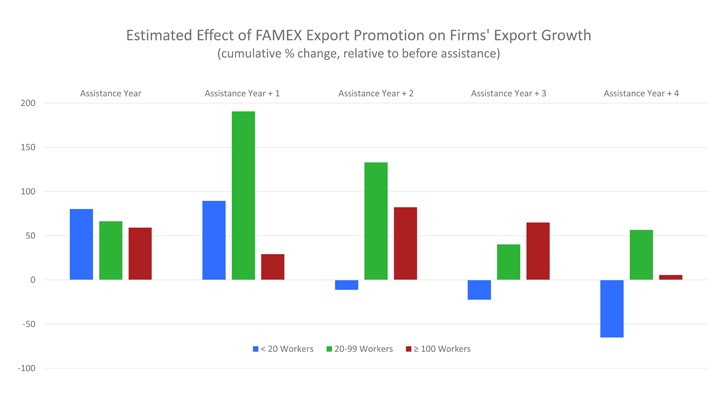
– Avoiding the extremes in export promotion is supported by recent research into Tunisia’s FAMEX matching-grant scheme. The FAMEX study found that, compared to a control group, the scheme’s beneficiaries – half of which had fewer than 50 employees – initially enjoyed faster export growth and greater diversification across regions and products. After three years, these firms remained more diversified, but their growth rates and exports were no higher than those of the firms in the control group. –

– When the firms were divided into three categories – small (fewer than 20 employees), medium (20-99), and large (100 or more) – the results were striking. Four years after receiving FAMEX assistance, exports of the small firms in the study had declined by 65%, (possibly because their rapid diversification came at the expense of longer-term growth), while exports of the large firms were only marginally higher (by 6%). But medium-sized firms’ exports grew by 57% over the same period. –

Read source article here

Wow, it’s as if Project Syndicate and the authors knew I was running for President of the Croatian Chamber of Commerce – great article on targeting export promotion support. We are too afraid to question whether our existing approach is actually producing results. If you have limited export promotion budgets (and we all do) – then why not get the biggest bang for the buck. Quit doing what you have always done!

– Spanish officials affirmed the magnitude of the country’s export boom today after the best annual performance on record as they count on a repeat in 2014 to sustain the economic recovery. –

– Deputy Trade Minister Jaime Garcia-Legaz announced in Madrid that the value of goods sold abroad last year rose to the highest level since at least 1971, and the trade deficit shrank to the smallest on record too. Those data, signaled by Spain’s tax agency on Feb. 19, follow an improvement in competitiveness Prime Minister Mariano Rajoy claims credit for. –

– Spain’s competitiveness is improving and the number of exporters is increasing,” he said…Deputy Economy Minister Fernando Jimenez Latorre already raised the government’s 2014 forecast for export growth of goods and services last week from 5.5 percent to as much as 7 percent — almost double the 3.7 percent increase predicted by the European Central Bank for the entire euro area. –

Read source article here

Good for Spain – 7% export growth – goes to show that there is no easy and painless solution to raising competitiveness, but it can be done. – “Spanish unit labor costs have fallen, increasing the country’s competitiveness,” said Juan Jose Toribio, a professor at the IESE business school in Madrid and a former head of finance policy at the Economy Ministry. “In a very short period of time, Spain has succeeded in turning a record deficit in its current account into a surplus.”

Zagreb – Milan Račić, Chief Executive Officer of Indium d.o.o., challenged the Croatian Chamber of Commerce (HGK) to step out of its comfort zone in a 16 page strategy for fiscal years 2014-1018. The strategy, submitted on Friday, challenged the organization to become the de facto Ministry of International Trade in Croatia by refocusing the bulk of its resources on export development instead of showy but ineffective conferences, political trade trips and trade shows – modes of business better suited to the 1950s. ˝HGK needs to be more than a high end party planner,˝ emphasized Mr. Račić.

In the strategy, Mr. Račić, who is also one of the candidates for president of HGK, highlighted the fact that the HGK has a budget equivalent to 16% of the U.S. Chamber of Commerce, while Croatia’s GDP is only 3.59% of the American GDP. “We spend $1 on HGK for every $1,789 of GDP, while the Americans spend that for every $13,720 of GDP generated. Yet we are surprised that our products are not competitive.” The strategy, called “Fortune Follows the Bold”, was issued on the same day that Fitch Ratings revised Croatia’s credit rating outlook to negative largely on account of a “policy credibility gap”.

“We have talked about reform and restructuring for the better part of the past 20 years and indeed may be some of the world’s greatest talkers of reform but nobody really believes us anymore – least of all ourselves,” says Mr. Račić. The strategy proposed that HGK serve as the model restructuring project in Croatia – in effect, “the” case study in honest, bold, decisive and transformative leadership. “We have tried declaratory restructuring – where we leave almost everything the same, but declare a successful restructuring – and it has been an abysmal failure,” says Mr. Račić.

The strategy, submitted in both Croatian and English, also criticized Croatia’s habit of putting politics above competency. “We unfortunately recycle our leaders more than we recycle bottles,” joked Mr. Račić. “If we want the HGK to be the flag-bearer for a transformed, confident, creative, honest and export-driven Croatian economy, then we can’t hand over its reins to the same management which has dominated our economy over the past 20 years.” He continued, “Croatia is in an economic war but just doesn’t know it and we make our difficult position even worse by not selecting and promoting objectively the best people, putting politics ahead of competency, and constantly recycling unsuccessful leaders of dubious qualities. The HGK deserves new fresh leadership. It is really fairly simple, if we want changes then we make real changes, if we don’t – then let’s just be honest about it. Fortune follows the bold!˝

About Indium d.o.o.

Indium d.o.o. is a management consulting firm specializing in restructuring and strategy. Mr. Račić holds a Bachelor of Arts degree from the University of Toronto, a law degree from the University of Manitoba and a Masters degree in International Law from McGill University. In his career, Mr. Račić has negotiated several billion dollars worth of M&A, corporate & structured finance, and aerospace transactions, formulated the development strategy for several market-leading multinationals, managed a $700 million operating lease portfolio and structured a €100 million real estate-focused private equity fund.

Contact Indium at media@pureindium.com.

Zagreb – Milan Račić, izvršni direktor poduzeća Indium d.o.o., potaknuo je Hrvatsku gospodarsku komoru (HGK) na iskorak iz zone ugode. Na 16 stranica strateškog plana za fiskalni period od 2014. do 2018. godine potaknuo je HGK na funkcioniranje poput de facto hrvatskog ministarstva međunarodne trgovine preusmjeravanjem resursa na razvoj izvoza umjesto zgodnih, no rijetko učinkovitih konferencija, političkih turneja po svijetu i sudjelovanja na gospodarskim sajmovima. Ovi modeli poslovanja bolje su funkcionirali tijekom 50-ih godina prošlog stoljeća. „HGK mora postati više od organizacije za planiranje zabava za visoke uzvanike“, istaknuo je Račić.

U svojem strateškom planu Račić, koji je ujedno i jedan od kandidata za funkciju predsjednika HGK, izdvaja činjenicu da HGK ima proračun koji iznosi 16% proračuna Američke gospodarske komore, dok BDP Hrvatske iznosi tek 3,59% američkog. „Na Hrvatsku gospodarsku komoru trošimo po jedan američki dolar za svakih 1,789 dolara našeg BDP-a, dok Amerikanci na svoju gospodarsku komoru troše po jedan dolar za svakih 13,720 dolara svojeg BDP-a. No svejedno se čudimo što naši proizvodi nisu konkurentni“. Strateški plan nazvan „Sreća prati hrabre“ je dovršen istog dana kada je agencija Fitch Ratings revidirala hrvatski kreditni rejting i proglasila ga negativnim, prvenstveno zbog upitne vjerodostojnosti.

„Već 20 godina govorimo o restrukturiranju te najavljujemo reforme i u tom govoru smo zaista nenadmašni u svijetu, ali nitko nam više ne vjeruje – a ponajmanje mi sami“, rekao je Račić. Njegov strateški plan predlaže da HGK posluži kao model za restrukturiranje u Hrvatskoj – kao idealan case study za proučavanje iskrenog, odvažnog, odlučnog i transformacijskog vodstva. „Pokušali smo s deklarativnim restrukturiranjem gdje gotovo sve ostaje isto, a reforme se proglašavaju uspješnima. To se pokazalo kao potpuni promašaj“, ističe Račić.

Strateški plan predstavljen i na hrvatskom i na engleskom jeziku također kritizira hrvatsku naviku davanja prednosti politici, a ne stručnosti. „Nažalost, recikliramo vođe više nego što recikliramo boce“, šali se Račić i dodaje: „Ako želimo da HGK bude simbol transformiranog, samopouzdanog, kreativnog i poštenog hrvatskog gospodarstva usmjerenog na izvoz, ne možemo HGK predati u ruke vodstva koje je dominiralo našom gospodarskom scenom tijekom proteklih 20 godina. Iako toga nismo svjesni, Hrvatska se trenutačno nalazi u ekonomskom ratu. Našu situaciju dodatno otežava to što ne odabiremo i ne promoviramo objektivno najbolje ljude, već politiku stavljamo ispred stručne kompetencije i konstantno recikliramo neuspješne vođe upitnih sposobnosti. HGK zaslužuje svježe novo vodstvo. Doista je jednostavno: ako želimo promjene, učinimo ih, a ako ne želimo, onda barem budimo iskreni. Sreća prati hrabre“.

O poduzeću Indium d.o.o.

Indium d.o.o. je poduzeće za poslovni konzalting koje se specijalizira za restrukturiranje i strateško planiranje.

Milan Račić diplomirao je ekonomiju, psihologiju i filozofiju na Sveučilištu u Torontu, pravo na Sveučilištu u Manitobi te međunarodno pravo na Sveučilištu McGill. Tijekom svoje karijere g. Račić zaključio je ugovore u vrijednosti od više milijardi dolara u preuzimanju i spajanju, financiranju poduzeća i strukturiranim financijskim transakcijama, formulirao strategiju za nekoliko vodećih multinacionalnih poduzeća, upravljao je 700 milijuna dolara vrijednim portfeljem operativnog leasinga te je strukturirao 100 milijuna eura vrijedan privatni investicijski fond za nekretnine.

Indium možete kontaktirati e-mailom na media@pureindium.com.

– Meanwhile the speculative Bitcoin bubble continues to inflate. Hard-core Bitcoiners are presumably getting sick of it being compared with the tulip mania of 1637, but the parallels are obvious, what with the constant hype about the ever-soaring value of some random commodity — because Bitcoin is generally being treated as a commodity rather than a currency. –

Read source article here

But personally, I’m with former president of the Dutch Central Bank, Nout Wellink, on this one. “This is worse than the tulip mania,” he told students this week. “At least then you got a tulip.”