Indium News

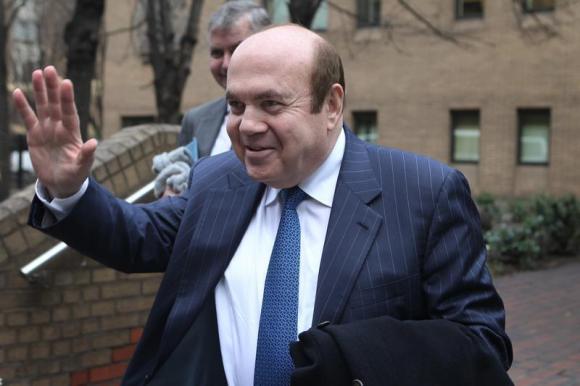
– The SFO had accused Dahdaleh of paying some $67 million in bribes to former managers of Aluminium Bahrain (Alba) ALBH.BH the world’s fourth-biggest aluminum smelter, between 1998 and 2006 in return for a cut of contracts worth over $3 billion. –

Read source article here

Corruption doesn’t have a nationality. The difference lies in how ˝our system˝ deals with it. It either cleans it up as it crops up, or sweeps it under the rug to let it fester and grow.

– The discussion of the German surplus thus confuses the issues in two ways. First, though the German economy and its surplus loom large in the context of Europe, an adjustment by Germany alone would benefit the eurozone periphery rather little. Second, in the global context, adjustment by Germany alone would benefit many countries only a little, while other surplus countries would benefit disproportionally. Adjustment by all northern European countries would have double the impact of any expansion of demand by Germany alone, owing to the high degree of integration among the “Teutonic” countries. –

Read source article here

Scapegoat GmbH – Germany has been an attractive target for external-deficit countries in Europe and beyond. But beating up on Germany alone appears to be the wrong way to get results.

– But the biggest prize lies in simplifying—or better still harmonizing—bankruptcy rules and improving the functioning of justice systems. In Italy, many businesses cite the inadequacies of the justice system as the single biggest impediment to investment. Portuguese entrepreneurs complain that while the government has made it easy to start a business, it remains difficult to close one; venture capitalists encourage Portuguese startups to incorporate in London. –

Read source article here

-Of course, this won’t be easy. Agreeing on a cross-border euro-zone resolution regime for banks is proving hard enough…But if Europe can create a banking union, then why not a bankruptcy union? The euro zone’s long-term recovery may depend on it.-

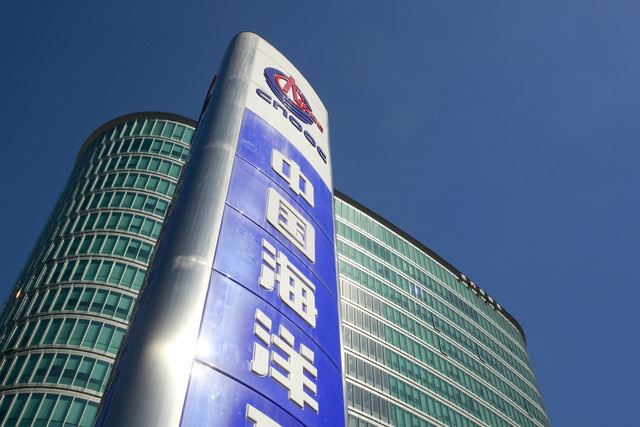
Cnooc Ltd. (883) and China National Petroleum Corp. are among companies registered to bid for what may become one of the world’s two largest deep-water fields, requiring an estimated $184 billion investment. Libra holds as much as 12 billion barrels, or three years of China’s consumption, Brazil’s oil regulator estimates. Other bidders include Royal Dutch Shell Plc and France’s Total SA.

Read source article here


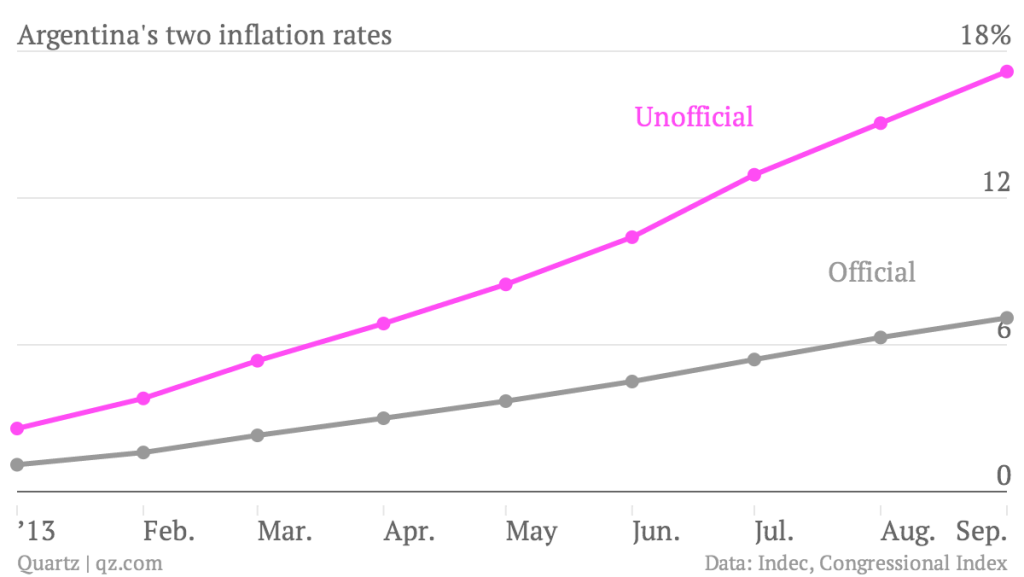
The IMF, PriceStats …and economists at MIT all agree that Argentina’s government has been cooking its books to mask higher inflation…At present, Argentina’s government holds that the country’s annualized rate is near 10%, while private estimates put it at closer to 25%.

Read source article here

Everything old is new again.

Prime Minister Zoran Milanovic’s cabinet agreed today to start seeking a buyer for 49 percent in the money-losing carrier, part of a plan to shore up Croatia’s public finances by selling state companies. It will keep a 50.25 percent stake…

Read source article here

It will be interesting to see whether Croatia will give up management control to the new 49% equity partner. Serbia made that decision in it’s deal with the UAE’s Etihad Airways. Okay -˝made˝ may be a euphamism as they may have had no other choice.

When it comes to exploiting new internal energy sources, shale and other forms of “unconventional” gas hold considerable promise – and could be a further way for central and eastern European countries to reduce their reliance on Russia. But progress has been limited, partly because of the controversy over the hydraulic fracturing (fracking) technology used to extract shale gas.

Read source article here

Several central and eastern European countries, including Bulgaria, have followed France in banning or limiting fracking. Poland is determined to exploit its shale gas resources, while Ukraine this year signed a significant shale gas contract with Royal Dutch Shell.


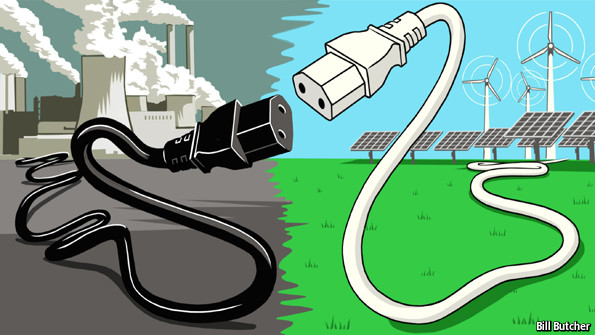
The decline of Europe’s utilities has certainly been startling. At their peak in 2008, the top 20 energy utilities were worth roughly €1 trillion ($1.3 trillion). Now they are worth less than half that (see chart 1). Since September 2008, utilities have been the worst-performing sector in the Morgan Stanley index of global share prices. In 2008 the top ten European utilities all had credit ratings of A or better. Now only five do.

Read source article here

The rot has gone furthest in Germany, where electricity from renewable sources has grown fastest. The country’s biggest utility, E.ON, has seen its share price fall by three-quarters from the peak and its income from conventional power generation (fossil fuels and nuclear) fall by more than a third since 2010…As the company’s chief financial officer laments, “Conventional power generation, quite frankly, as a business unit, is fighting for its economic survival.”

So the gas and nuclear bits of the utilities’ business were heading for trouble even before the renewables bonanza, making the growth of solar and wind all the more disruptive. Renewables capacity (which is much higher than output) is almost half of electricity-generating capacity in Germany and roughly one-third in Spain and Italy. Total capacity, including renewables, is way above peak demand in all three countries. So renewables have added mightily to oversupply.

As much as I would love to receive some negative electricity bills, the current market situation makes me uneasy. Market disruption is great, as long as it drives down prices and/or introduces technological advances which drive greater efficiency. But these negative electricity prices are an illusion as they do not reflect the billions in subsidies directed at renewables sources. The key to positive market disruption is driving down net pricing – with the emphasis on net. The current market disruption begs the question of the wisdom of continuing such subsidies. Breast-feeding is great, and natural/renewable, but sooner or later – one must be weaned.


The affair features a Hungarian chief executive officer who is wanted by Interpol and sheltered by his home country, a Croatian bribery probe that put a former prime minister in jail, a possible downgrade for Hungary’s largest refiner and a battle over control of a $7.2-billion Croatian energy company that one analyst calls a “gem.”

Read source article here