

– In fact, successful exporters tend to be part of an exclusive group of “superstar” companies. A recent study by Caroline Freund and Martha Denisse Pierola that examined export patterns in 32 countries found that the top 1% of exporters account for more than half of all (non-oil) exports, while the top 5% account for almost 80%. Because these large exporters already have the access to finance and information that is needed to succeed in foreign markets, any additional state aid is merely a gift. –
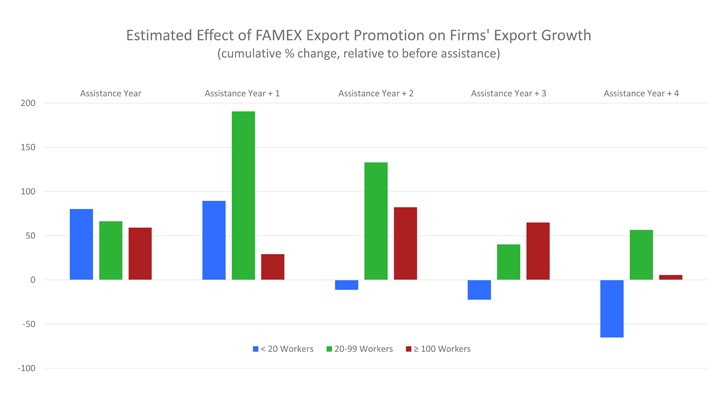
– Avoiding the extremes in export promotion is supported by recent research into Tunisia’s FAMEX matching-grant scheme. The FAMEX study found that, compared to a control group, the scheme’s beneficiaries – half of which had fewer than 50 employees – initially enjoyed faster export growth and greater diversification across regions and products. After three years, these firms remained more diversified, but their growth rates and exports were no higher than those of the firms in the control group. –
– When the firms were divided into three categories – small (fewer than 20 employees), medium (20-99), and large (100 or more) – the results were striking. Four years after receiving FAMEX assistance, exports of the small firms in the study had declined by 65%, (possibly because their rapid diversification came at the expense of longer-term growth), while exports of the large firms were only marginally higher (by 6%). But medium-sized firms’ exports grew by 57% over the same period. –
Read source article here
Wow, it’s as if Project Syndicate and the authors knew I was running for President of the Croatian Chamber of Commerce – great article on targeting export promotion support. We are too afraid to question whether our existing approach is actually producing results. If you have limited export promotion budgets (and we all do) – then why not get the biggest bang for the buck. Quit doing what you have always done!